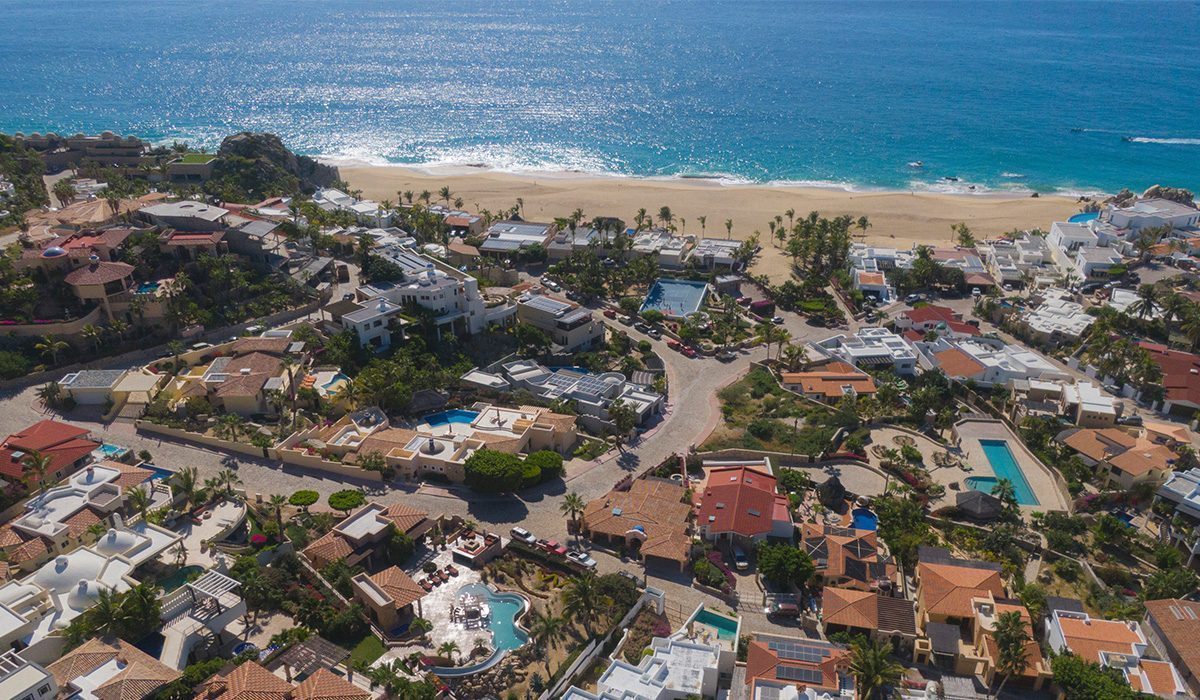
I get asked this question at least twice a month: "Should I buy in Cabo or the Bahamas?" Both are stunning, both attract American money, and both look great in Instagram posts. But beneath the turquoise water, these two markets are built on completely different financial foundations — and the gap matters more than most buyers realize.
Key Takeaways
- ✓ Cabo closing costs run 5–7% vs 12–17% in the Bahamas — on a $1.5M property, that is a $110K difference at the door
- ✓ Annual property taxes in Cabo are 70–85% lower than comparable Bahamas properties
- ✓ Cabo's year-round occupancy rates (65–78%) outperform the Bahamas (55–70%) for vacation rentals
- ✓ Hurricane insurance costs 2–3x more in the Bahamas than in Cabo
- ✓ Both markets allow full foreign ownership, but Mexico's fideicomiso is simpler and cheaper than most buyers expect
Considering Cabo Real Estate?
We help buyers compare markets and find properties that match their lifestyle and investment goals.
Schedule a Free ConsultationOwnership Structures: Fideicomiso vs Freehold
The first thing every buyer asks about Mexico is the fideicomiso — the bank trust that allows foreigners to own coastal property. It sounds complicated, but after walking dozens of buyers through it, I can tell you the process takes 4–6 weeks, costs $2,000–$3,500 to set up, and renews automatically every 50 years. You have full ownership rights: sell, lease, renovate, inherit, whatever you want.
The Bahamas offers freehold ownership — no trust required. That sounds simpler, and technically it is. But foreigners buying property over $500,000 must register with the Bahamas Investment Authority, and the government requires International Persons Landholding registration. The process is straightforward but adds legal fees and a timeline of 4–8 weeks for approval.
Here is the thing most comparison articles miss: the fideicomiso is not a restriction. It is a legal vehicle that actually protects your interests through a regulated Mexican bank. The Mexican Foreign Affairs Ministry administers the permits, and the banking regulator (CNBV) oversees the trusts. Your property rights are constitutionally protected.
Cost of Entry: Where the Real Difference Lives
Let me run the numbers on a $1.5 million beachfront condo purchase in each market, because this is where the conversation gets real:
Cabo Closing Costs (~$90,000–$105,000)
- ISABI transfer tax: 2% = $30,000
- Notary fees: ~$5,000–$8,000
- Fideicomiso setup: $2,000–$3,500
- Title insurance: $3,500–$5,000
- Legal fees: $3,000–$5,000
- Appraisal and inspections: $1,500–$3,000
- Miscellaneous (certificates, translations): $2,000–$3,000
Total: approximately 5.5–7% of purchase price. For a detailed breakdown, see our complete closing costs guide.
Bahamas Closing Costs (~$195,000–$255,000)
- Stamp duty: 10% on value over $1M (sliding scale starts at 2.5%) = $100,000–$150,000
- Legal fees: 2.5% = $37,500
- VAT on new construction: 10% (if applicable)
- Real Property Tax (first year): $8,750
- Registration and miscellaneous: $3,000–$5,000
Total: approximately 13–17% of purchase price.
The difference is stark: $105,000–$150,000 more to close in the Bahamas on the same purchase price. That is not a rounding error. That is a luxury car. That is a full year of rental income. And it is money that never comes back.
Annual Carrying Costs: The Numbers That Compound
Closing costs hit once. Carrying costs hit every year. Here is what a $1.5M beachfront condo costs annually in each market:
| Expense | Cabo | Bahamas |
|---|---|---|
| Property tax | $500–$1,500 | $8,750–$12,500 |
| Insurance | $3,000–$5,000 | $8,000–$15,000 |
| HOA/maintenance | $4,800–$12,000 | $6,000–$15,000 |
| Utilities | $2,400–$4,800 | $6,000–$12,000 |
| Fideicomiso/trust fees | $500–$700 | N/A |
| Total annual | $11,200–$24,000 | $28,750–$54,500 |
Bahamas electricity costs are among the highest in the Caribbean — Bahamas Power and Light charges roughly $0.40–$0.50/kWh compared to $0.08–$0.15/kWh through CFE in Mexico. Running AC in a tropical climate is unavoidable in both locations, but the electric bill difference on a 2,000 sq ft condo can be $300–$500/month.
Over 10 years, the carrying cost difference is $175,000–$305,000. Add the closing cost gap and you are looking at $280,000–$455,000 less to own a comparable property in Cabo over a decade. That is not a minor consideration.
Rental Income Potential
Both markets are vacation rental powerhouses, but the economics differ:
Cabo advantages:
- Higher occupancy rates: 65–78% on the Corridor and beachfront communities vs 55–70% in Nassau
- Year-round demand from both coasts of the US and Canada
- Lower operating costs mean better net yields: 5–8% net vs 4–6% net in the Bahamas
- Proximity to Los Angeles, Phoenix, Dallas, and Denver drives weekend and short-trip bookings that the Bahamas rarely captures
Bahamas advantages:
- Higher peak-season nightly rates for ultra-luxury properties (Exumas, Harbour Island)
- Strong demand from the US East Coast and European markets
- No income tax — the Bahamas has zero income tax, capital gains tax, or inheritance tax
- Brand recognition: "I have a place in the Bahamas" carries a specific cachet
For pure rental investment analysis, Cabo delivers better cash-on-cash returns for most property types. The Bahamas wins on the ultra-luxury tier ($5M+) where nightly rates can exceed $2,000 and the clientele is less price-sensitive.
Want to See the Rental Numbers for Specific Communities?
We break down expected occupancy, nightly rates, and net yields for every major Cabo development.
Book a Strategy CallLifestyle: Desert Luxury vs Tropical Island
This is where personal preference takes over and spreadsheets take a back seat. I have spent time in both places, and they deliver fundamentally different experiences:
Cabo delivers:
- Desert-meets-ocean landscapes that look like nowhere else on Earth
- World-class golf — 18+ championship courses including designs by Nicklaus, Fazio, Dye, Norman, and Davis Love III
- A restaurant scene that has exploded in the last five years — Michelin-recognized chefs, farm-to-table, and some of the best tacos on the planet
- Deep-sea fishing that is genuinely the best in the world (this is not marketing — Cabo is the marlin capital)
- A massive expat community of 30,000+ Americans and Canadians
- Mexican culture, warmth, and a cost of living that lets you live well
The Bahamas delivers:
- Turquoise water that is genuinely unmatched — the clarity and color are extraordinary
- Island-hopping lifestyle across 700 islands
- English-speaking country (no language barrier)
- Proximity to Florida (25 minutes from Fort Lauderdale to Freeport by air)
- Zero income tax, capital gains tax, and inheritance tax — a genuine tax haven
- Exclusive island communities (Baker's Bay, Albany, Lyford Cay) with extreme privacy
Tax Implications for US Citizens
Both countries require US citizens to report worldwide income. The key differences:
Mexico: Rental income is subject to Mexican tax (ISR) at rates from 1.92% to 35%, but the US-Mexico tax treaty prevents double taxation. Most Cabo rental owners pay an effective Mexican rate of 15–25% on net rental income after deductions, then credit that against their US obligation. Mexico also charges a capital gains tax of roughly 25–35% on the profit when you sell, but treaty credits and primary residence exclusions can reduce the effective US burden significantly.
Bahamas: Zero local tax on rental income, capital gains, or inheritance. Sounds perfect, right? The catch: without local taxes paid, you have no foreign tax credit to offset your US tax obligation. Every dollar of rental income and capital gains is fully taxable in the US at your marginal rate. For high-income earners in the 37% bracket, this can negate much of the Bahamas' "tax haven" advantage.
Price Appreciation and Market Maturity
The Los Cabos market has seen steady appreciation of 5–8% annually over the past five years, driven by infrastructure investment, new flight routes, and a construction boom in branded residences. The market has matured significantly since 2020, with price per square foot in premium communities ranging from $400–$1,200 depending on location and amenities.
The Bahamas market has been more volatile. Nassau and Paradise Island have seen moderate appreciation of 3–5% annually, but the Out Islands (Exumas, Eleuthera) have seen sharper cycles. The 2019 Hurricane Dorian impact is still felt in certain areas, particularly Abaco, where rebuilding continues. Ultra-luxury enclaves like Albany and Baker's Bay have performed well (5–8% annual appreciation) but represent a very small slice of the market.
The Verdict: When Each Market Wins
Choose Cabo if:
- You live west of the Mississippi — flight times are 2–4 hours from most western US cities
- You want the best cost-adjusted returns (lower entry costs, lower carrying costs, higher occupancy)
- Golf is a priority — the Bahamas has courses, but Cabo's collection is world-class
- You want a large, established expat community and a proven expat infrastructure
- You prefer desert-ocean landscape over tropical-island landscape
Choose the Bahamas if:
- You live in Florida, the Southeast, or the Northeast — a 2–3 hour flight changes everything
- Estate planning is paramount — zero inheritance tax simplifies generational wealth transfer
- You want the ultra-luxury island exclusivity that places like Baker's Bay and Albany offer
- English-only matters to you — no language barrier whatsoever
- You plan to spend 183+ days/year and want to establish Bahamian tax residency
For most American buyers I work with — especially those in the West and Midwest — Cabo delivers more value per dollar, better rental returns, and a lifestyle that keeps people coming back. But if you are a Florida-based buyer looking for generational estate planning advantages and ultra-private island living, the Bahamas earns its premium.
The real question is not which market is "better." It is which market fits your life. And that starts with an honest conversation about where you will actually spend your time.
Ready to Explore Cabo Real Estate?
Whether you are comparing markets or ready to buy, our team provides the data and local expertise to make a confident decision.
Contact Us TodayFrequently Asked Questions
Can Americans buy property freely in both Cabo and the Bahamas?+
Yes, but through different mechanisms. In Mexico, foreigners buy within the restricted zone (within 50 km of the coast) through a fideicomiso — a bank trust that grants full ownership rights for renewable 50-year terms. In the Bahamas, foreigners can buy freely with no trust required, but must register with the Investments Board for properties over $500,000, and the process involves higher stamp taxes (2.5–10% on a sliding scale) that push total closing costs to 12–17% of the purchase price.
Which market has lower property taxes — Cabo or the Bahamas?+
Mexico wins handily. Annual property tax (predial) in Los Cabos typically runs 0.1–0.3% of the cadastral value, which is often far below market value. For a $1M property, expect $300–$1,500/year. The Bahamas charges annual Real Property Tax on a sliding scale: 0.75% on the first $500K of value and 1% above that for owner-occupied property (higher for vacant/rental), making the annual bill $5,000–$10,000+ on a $1M property.
What are total closing costs in the Bahamas compared to Cabo?+
Cabo closing costs typically run 5–7% of the purchase price, including notary fees, fideicomiso setup, ISABI transfer tax (2% in BCS), and legal fees. Bahamas closing costs run 12–17% due to stamp duty (2.5–10% on a sliding scale — 10% on properties over $1M), legal fees (2.5–3%), and VAT on new construction (10%). On a $1.5M property, you are looking at roughly $90K in Cabo vs $200K+ in the Bahamas.
Which market offers better vacation rental income?+
Both markets perform well, but Cabo has higher occupancy rates year-round due to its proximity to the US West Coast. Cabo properties on the Corridor average 65–78% occupancy with nightly rates of $200–$500 for a two-bedroom condo. Bahamian rental properties in Nassau/Paradise Island see 55–70% occupancy with similar nightly rates, but the higher operating costs (electricity alone can exceed $500/month) compress net yields. Cabo net yields typically range 5–8% vs 4–6% in the Bahamas.
How do flight times compare from major US cities?+
Cabo (SJD) is 2.5 hours from Los Angeles, 3.5 hours from Dallas, and 5.5 hours from New York. Nassau (NAS) is 3 hours from Miami, 3.5 hours from Atlanta, and 3 hours from New York. For West Coast buyers, Cabo is dramatically more accessible. For East Coast and Southeast buyers, the Bahamas has the edge. Both airports have extensive nonstop service from major US hubs.
What about hurricane risk in each location?+
The Bahamas sits in the Atlantic hurricane belt and has been severely impacted — Hurricane Dorian (2019) caused $3.4 billion in damage. Insurance costs reflect this: expect 2–4% of insured value annually. Cabo is on the Pacific side of Baja, which sees fewer hurricanes. Insurance runs 0.5–1.5% of value. Both markets require hurricane preparedness, but Cabo's risk profile and insurance costs are significantly lower.
Aaron Cuha
Real Estate Advisor & Los Cabos Market Expert
Real estate advisor and founder of Living In Cabo. 15+ years helping families navigate complex real estate decisions. Strategic partner with Ronival — Baja's largest brokerage.